8 October 2026
When Ali’sha thinks about becoming a māmā, she remembers how much she had always wanted children. Her pregnancy was exciting, and for the first months she felt lucky. But at 30 weeks, everything changed.
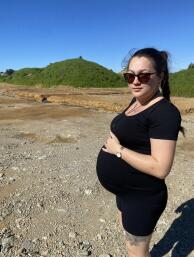
After developing pre-eclampsia and cholestasis, a serious liver disorder than develops in pregnancy, Ali’sha was admitted to hospital. Her son arrived early and by C-section at 34 weeks and five days. He then spent 21 days in hospital on breathing support.
“It was the hardest thing I’ve ever been through in my life,” “Leaving your baby there overnight… I cannot describe the absolute agony and chaos that’s going on in your mind.”
When her baby finally came home, Ali’sha was grateful he was alive and healthy. She had a beautiful home and a supportive partner. But after the trauma of those early weeks, she found herself living in constant fear.
Because her son had needed breathing support, Ali’sha would lie awake listening to and reaching out to feel every breath. Feeding became another source of anxiety. For months, Ali’sha logged every feed, every nappy change and every minute of sleep.
“It was really hard to enjoy [being a mum],” “I was just so scared and worried all the time.”
Finding support through Plunket
Around her son’s six-month Plunket check, Ali’sha spoke honestly with her Plunket nurse about how she was feeling. Depression was creeping in, and the anxiety “was set”, she says.
Her Plunket nurse listened, asked questions and conducted a brief assessment, eventually suggesting that Ali’sha be referred to Plunket’s Perinatal Wellbeing Service (OPWS). It’s a free online programme supporting parents and caregivers experiencing mild to moderate distress, anxiety or depressive symptoms while caring for pēpi (babies) and tamariki aged up to five. While still in pilot phase, OPWS has already been seeing amazing results with whānau.
For Ali’sha, the online format made support possible. She could join sessions from her couch, on her laptop, while her pēpi was nearby. Sometimes her partner watched their son during a lunch break; other times, her son was simply part of the session.
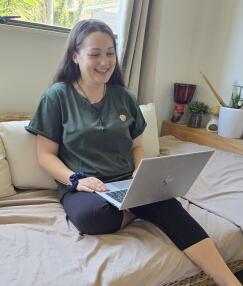
Ali'sha found the online format of her OPWS sessions meant at-home comfort while discussing challenges with her postnatal anxiety and depression.
“Alex was extremely welcoming to that,” Ali’sha says of her Plunket practitioner. “She was completely understanding… if he needed my attention for a quick minute, I’d be able to look after him and then pick up where we had left off.”
Over 12 sessions, Ali’sha and Alex worked through whatever felt most pressing week by week. There was space to talk, to reflect, and to learn practical tools she could use in daily life.
One of the biggest shifts was learning to recognise what Ali’sha calls ‘anxiety language’. The way anxiety had started to take over her thoughts.
With Alex’s support, she learned how to pause, notice catastrophic thinking, and talk herself through what was real and what was anxiety. “It just helps you feel like you’ve got space again within yourself,” she says. “You can breathe and carry on with your day.”
Ali'sha describes Alex as someone she formed a genuine connection with during her care plan. "If you're being taken over by anxiety, it can be hard to open up. But there was none of that with Alex. I just knew she was a safe place."
"And we'd just laugh a lot, too, which I really appreciated," she adds with a smile.
“A weight off my shoulders”
Alex also helped Ali’sha process the trauma of her birth experience. For months, she had found it difficult to look at photos and videos from the day her son was born. Her birth story was not the calm water birth she had dreamed of, and making peace with that – grieving that - took time.
“Alex helped me process that trauma associated [my son’s birth] and accept it,” Ali’sha says. “Even be able to look at it from a positive light and be grateful… which is just like a weight off my shoulders.”
Today, motherhood feels very different. Ali’sha says she still worries sometimes, as any parent does. But she is far more able to relax into life with her son. The support she received has helped make parenting feel lighter, more manageable, and, ultimately, more joyful.
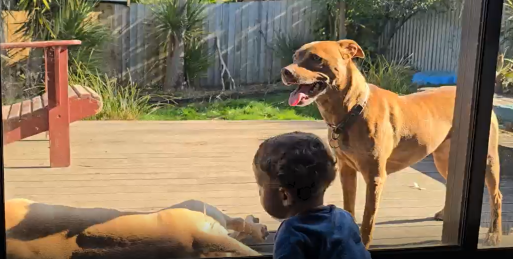
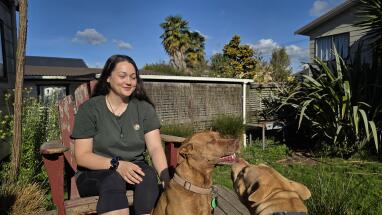
Ali'sha's son enjoying time with the family's two cuddly dogs.
“He is my whole reason why now,” she says. “He makes life so much better. I love being his mum. He’s just so fun and cheeky and smart… he’s changed my life completely for the better.”
Keeping OPWS going for more māmā
Plunket’s mental health support like the Online Perinatal Wellbeing Service makes mental health support easier to access for parents and caregivers who may already be exhausted, overwhelmed, isolated, or unsure how to ask for help. It's particularly vital for parents who aren't deemed 'bad enough' for more urgent or specialist mental health care in the public system. And because sessions are online, support can fit around whānau life including feeding, naps, unsettled moments, and all the realities of caring for a young child (or multiple tamariki).
For Ali’sha, that kind of support was life changing.
“So many mums are out there struggling. They may be too ashamed, too shy, too scared, or thinking they wouldn’t be able to fit therapy into their already extremely exhausting and busy schedules,” she says. “But the way that Plunket are able to work around you and baby just makes it absolutely doable. And it’s more than worth it.”
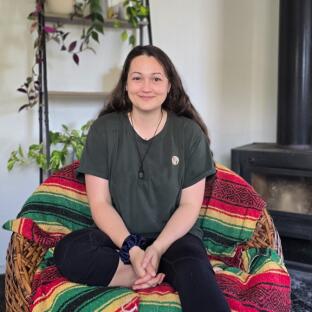
Ali'sha feels the help she received from Alex M has enabled her to 'come back to herself'.
Her message to another parent who might be feeling the way she did is simple: “Tell your Plunket nurse. Ask to be referred to one of their mental health services. Don’t wait. Just go.”
And to anyone considering supporting Plunket so vital mental health support services like OPWS can continue, consider donating this Plunket Giving Day. Every dollar helps Plunket be right there for struggling new parents before they fall through the cracks. “It’d be such a shame if there wasn’t anyone at the other end of the line when whānau call,” says Ali’sha. “We need to keep those services available.”
-
Next
Jovy's Story
