8 October 2026
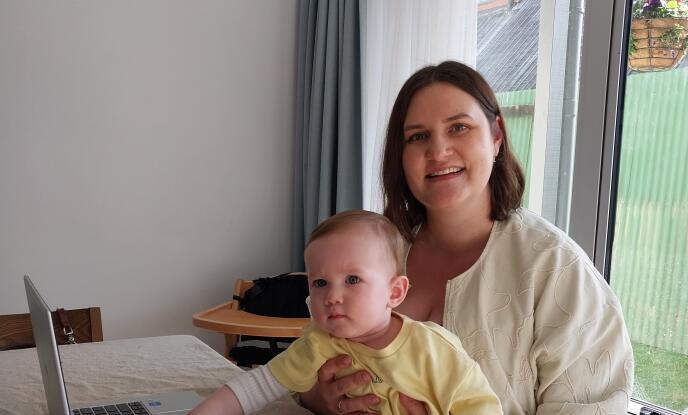
Kelsi’s journey to becoming a mum began after a difficult year of hormone and cycle-related health issues, including diagnoses of endometriosis and Polyendocrine Metabolic Ovarian Syndrome (PMOS). She worked hard to get her hormones on a healthy track, then became pregnant more quickly than she had expected.
Her pregnancy was physically demanding, with severe nausea and vomiting throughout. After a challenging birth, her baby, Ardie, then spent four days in NICU before the whānau moved to birth care and then home.

“That’s when the real challenges of motherhood started”
Those first few months at home were far from the joyful newborn bubble Kelsi had imagined. She didn’t feel the instant overwhelming love and happiness she had heard other māmā describe, and that made her question herself.
“It made me feel like I wasn’t a good mum to Ardie,” Kelsi says. “I felt like I had absolutely no idea what I was doing and didn’t want to ask people for help. I felt like I was being a burden.”
Looking back, Kelsi can see those thoughts weren’t true. But at the time, in what she calls “the newborn trenches”, they were hard to shake.
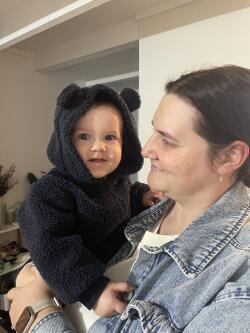
Some reassurance at home led to a lifeline of support
Plunket first came into Kelsi’s life when Ardie was six weeks old. From the beginning, she was open with her Plunket nurse about her history of anxiety. Kelsi says the reassurance she received about Ardie's health and growth made a huge difference.
“You’re constantly in this state of, ‘Is this normal?’” “To have someone knowledgeable in your home tell you, ‘He’s fine, you're doing a fantastic job,’ was such a reassuring experience for me.”
Kelsi was “always trying to put on a brave face." But when Ardie was around six months old, Kelsi’s Plunket nurse visited and could see that Kelsi needed more specialised support.
She referred Kelsi to Plunket’s pilot programme, the Online Perinatal Wellbeing Service (OPWS). It provides free, online, short-term support for parents and caregivers in the Waikato region experiencing mild to moderate distress, anxiety or depressive symptoms. The focus is on early intervention and practical wellbeing support, helping struggling new parents before things escalate.
Kelsi immediately said yes.
Support that fitted around real life
Kelsi had online sessions every two to three weeks. She worked with practitioners Alex M and Alexandra D. With Alex M, they focused on anxiety management and then Alex M referred her to Alexandra, who helped Kelsi focus on the impact of hormones on mental wellbeing.
Each session usually lasted between 45 minutes and an hour. After each one, Kelsi would receive a follow-up email with notes, links and resources that she could return to in her own time.
The online format removed some of the everyday barriers that can make it hard for parents to attend appointments, like finding childcare, navigating traffic, working around a baby’s nap, or needing to reschedule when life simply doesn't go to plan.
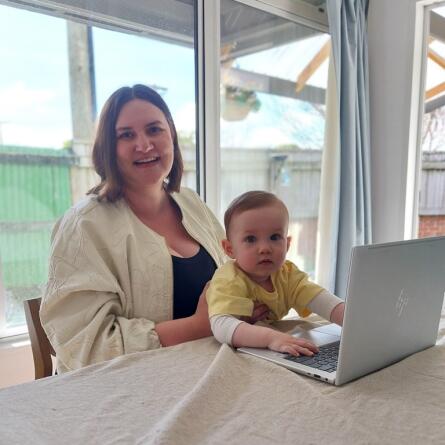
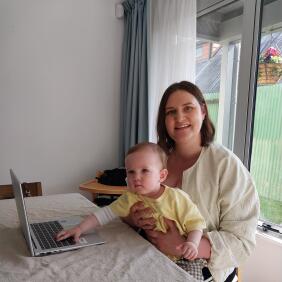
Kelsi and Ardie have been able to enjoy sessions from the coziness of home.
“Having the sessions online also made me feel a lot more relaxed going into the sessions,”
Sometimes Ardie was there too, playing in the background or popping his head into view. Kelsi says nothing was ever a problem for Alex D and the Plunket team, whether appointments needed to be shorter, longer, moved or adjusted.
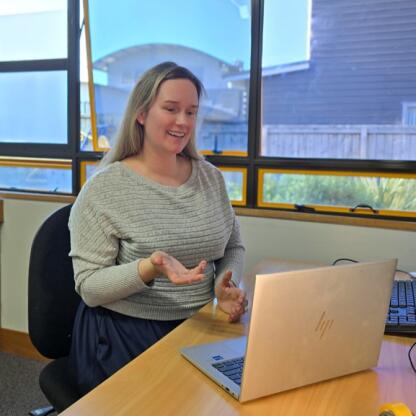
OPWS practitioner, Alex D, in action.
Kelsi also worked with Alex D on hormone-related wellbeing, including ways to manage endometriosis and PMOS through simple, achievable daily changes such as adding more protein and fibre. This is a particular area of expertise for Alex D.
“You don’t want to be told you need to go on a strict, rigid plan,” Kelsi says about these nutritional tips and tricks. “Especially when you’ve got a one-year-old. Being able to talk through simple changes felt really manageable and reassuring.”
Enjoying motherhood, something that once felt impossible.
Since starting with the service, Kelsi says she feels more able to pause and reset when parenting doesn’t go the way she expected.
“Even with simple things like naps. If a nap doesn’t happen when it’s supposed to, it’s not the end of the world,” “We just reset, readjust and try not to stew on it.”
The biggest change, though, is how Kelsi feels about being Ardie’s mum.
“Being a mum is the most crazy experience!” “Nothing prepares you for motherhood. But being able to hang out with your bestie all the time, watching him grow and seeing his personality start to come out is such a fun time.”
That joy feels especially meaningful with the early days having been so difficult.
“To look back on those first three months and to now be able to sit here and say it’s so much fun day to day…I would never have thought that possible,”
“And not every day is rainbows and sunshine, and we’re certainly not finished on the journey of my mental health. But it’s so much more enjoyable now than it was back then.”
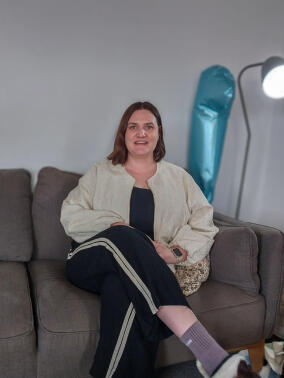
Kelsi absolutely adores beign Ardie's Mum. They recently celebrated his first birthday (with a big blue number one balloon!)
Continuing OPWS for more parents like Kelsi
or Kelsi, the support she received has helped her become the best version of herself and, in her words, the best possible mother for Ardie.
Without it, she believes she would have remained in “a constant loop of fear and anxiety and worry”, trying to keep up a brave face while feeling overwhelmed inside.
“It’s simply exhausting to be feeling like that all the time,” she says. “It’s hard to get yourself out of that headspace without this kind of support.”
Kelsi hopes more parents will be able to access Plunket’s mental health programmes, like the Online Perinatal Wellbeing Service, when they need it most.
“Motherhood is so hard, and it’s made so much harder when you’re not feeling 100% within yourself,” she says. “The more people I talk to about my experience, especially in those early days, the clearer it becomes that this is really common and that more mums need more support.”
“Not a lot of people know where to go, or that this is even an option for them. If we can get more funding in, more mums can get the support they need.”
-
Next
Jovy's Story
