Jess still cries when she remembers a particular moment with her three-month-old pēpi (baby), Lachlan. She was sitting in the nursery, holding her son. “I hate to admit it, but I looked down at him and I resented him. I just wanted to leave.”
It was hard for Jess to understand why she felt so overwhelmed; she was finally holding the child she and her husband, Daniel, had dreamed about for years.
Lachlan was welcomed after a long IVF journey – he was their fourth transfer – and they had been very open with those around them about the challenges of conceiving, and their happiness in finally expecting his arrival.
So that day in the nursery was a dark one, a confusing one. How she was feeling didn’t make rational sense at all to Jess, but she recognised that her feelings were real. She knew she couldn’t keep going without help.
Lachlan had also arrived suddenly - nine weeks early. It threw Jess and Daniel into a world they never expected. Instead of sleepy newborn cuddles at home, Jess and Lachlan were in a neonatal unit in another city while Daniel juggled work and hospital visits.
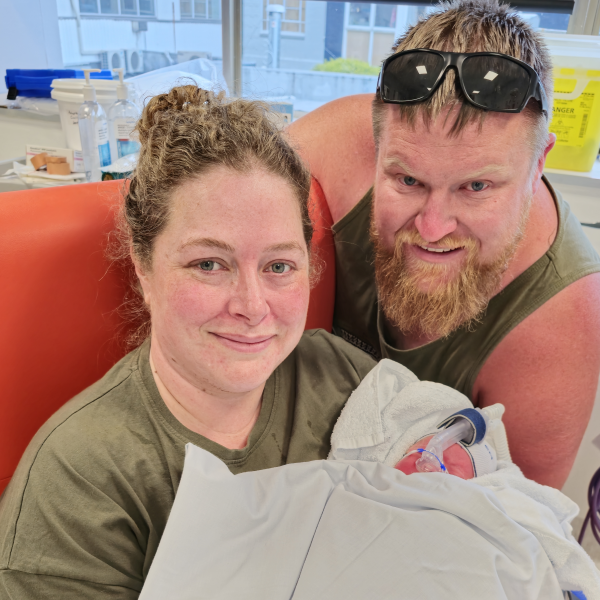
Being away from family, especially over Christmas, wasn’t the start to Lachlan’s life they had hoped for.
After five weeks, Lachlan was well enough to come home. Everyone hoped things would start to feel ‘normal’. Jess was specifically yearning for the newborn phase of cuddles and love that she had wanted for years. But after a few months, things began to change for Jess. And not for the better.
“I felt my mental health slipping quite drastically… more than just the baby blues. Almost like everything we had been through had just caught up with me.
“I finally had a chance to breathe. But instead, it just felt like I had this huge weight on my shoulders, and I couldn't make it through the day.”
Jess knew this wasn’t normal – for her, or for anyone. She had lost her own mum a few years earlier and had always seen herself as someone who could cope with life’s challenges. But now she was frightened by the strong emotions she didn’t understand.
“Lachlan was the perfect baby. He fed, and he slept. He was settled. He didn't have anything wrong, so there was no reason for me to be like I was. I just felt like I was at my wits' end, and I couldn't cope. I didn’t want to look back and regret the first year of his life.”
Daniel could also see her mental health worsen. He encouraged Jess to mention how she was feeling to her Plunket nurse, who had built a trusting relationship with the whānau from their very first meeting. Over multiple visits, she and Jess chatted about everything from feeding to the realities of having a premature baby, to finally touching on her mental health.
When Jess opened up, her nurse recognised she needed extra support and referred her to the Plunket Perinatal Adjustment Programme (PPNAP) in her area. It offers free, one-on-one mental health support for mothers with babies under one year, even during pregnancy. It’s designed especially for mothers who are showing signs of depression or anxiety, but who aren’t yet considered ‘bad enough’ for stretched public services.
As many as one in four mothers experience some kind of perinatal depression. Often the more mild or moderate cases can slip through the cracks. Programmes like PPNAP allow these māmā to share their feelings and experiences in confidence, to ‘own’ their recovery and to learn new skills of self-care.
Jess knew she needed help – but she was terrified to open up to someone new, after a bad experience when getting grief support in the past. Over time though, Jess developed a trusting relationship with Susie, a practitioner in the PPNAP programme. She would see Susie for an hour, sometimes two at a time, for talk therapy and practical tips for managing her strong emotions.
Slowly but surely, this mental health support meant that Jess really started to enjoy baby Lachlan.
“PPNAP gave Lachlan the first year of life he deserved and a mum who could fully show up and be present for him,” says Jess.
Every new parent should have a trusted Plunket kaimahi (staff) looking out not just for pēpi, but māmā too. Noticing when she is struggling is crucial for the whole family to thrive.
That support might start with something as simple as a routine Plunket nurse visit. But it doesn’t stop there. Over time, those visits build trust, and in that safe space, a māmā like Jess can finally ask for help, and be referred to other, more specific programmes.
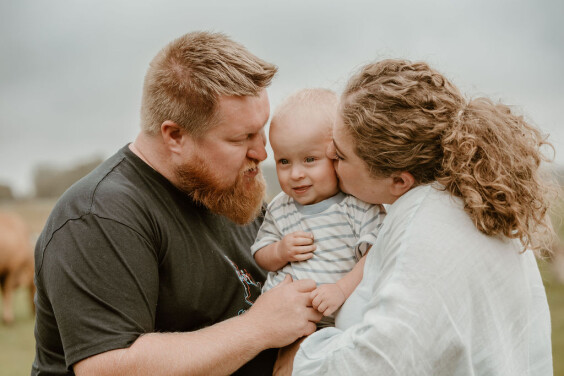
Donating to Plunket can help mums get that help, to begin to feel joy with their pēpi. As Jess herself puts it, “Mums shouldn’t be struggling. They should be snuggling their babies.”
