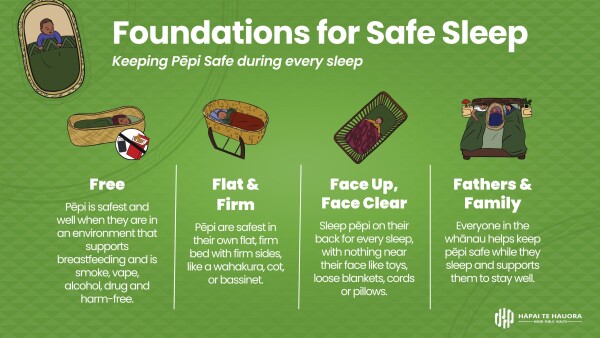
The Foundations for Safe Sleep have been developed to support whānau and communities make every sleep a safe sleep.
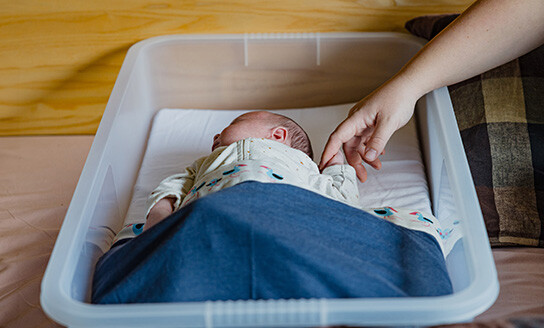
Face up, Face clear
Pēpi need their own flat, firm bed like a wahakura, pēpi-pod®, bassinet or cot.
- Always place pēpi on their back for every sleep.
- Ensure baby’s face is not covered by blankets, pillows, or soft items.
Flat and Firm
Always place pēpi on their back, with no pillows, toys or loose blankets.
- Pēpi should sleep on a flat, firm surface, with firm sides, made for pēpi — like a wahakura, pēpi-pod®, baby cot or bassinette.
- Avoid anything that isn't made for baby sleep, such as couches, chairs, pillows, folded duvets, or baby slings/wraps that bring baby's chin to chest during sleep.
- Be careful with second-hand baby beds, bassinettes, or cots. Check for broken parts – repairs may be needed.
- Car seats or capsules protect your baby when you’re travelling in the car. Place pēpi in a safe sleep space when you're at home or once you reach your destination.
Free
Pēpi is safest and well when they are in an environment that supports breastfeeding, and is smoke, vape, alcohol, drug and harm free.
- Smoking in pregnancy increases the risk of Sudden Unexpected Death in Infancy (SUDI) by six times.
- Bed-sharing where there was smoking in pregnancy increases the risk by 32 times.
- The best safe sleep space for your pēpi is their own safe sleep space – in a cot, bassinet or a wahakura or Pēpi-pod® on a flat surface. For the first six months pēpi is safest in their own sleep space in the same room as māmā or caregiver.
- Using a wahakura or Pēpi-pod® can keep pēpi safe while still being placed in the parents' bed.
- Pēpi are safest when the adults around them are alcohol-free and drug-free at sleep time. Being fully alert helps us respond quickly if they stir or need support.
- Keep the sleeping space for pēpi free from anything that makes it hard to breathe, like loose blankets, soft toys, pillows, or cords from curtains or blinds.
- Use gentle hands to keep pēpi safe and free from harm.
- Smoke-free and vape-free whānau and sleep spaces are vital. Pēpi that are exposed to smoke and vape are less able to wake up or breathe properly in their sleep.
Fathers and Family
All the whānau can help keep pēpi safe during sleep. Safe sleep is a shared responsibility that involves whānau, carers and the community supporting pēpi to sleep safely.
- Fathers, partners and whānau play a vital role in supporting māmā. This might include caring for pēpi, settling pēpi and household chores.
- Make a plan for a safe sleep for pēpi when not at home. You may want to take your wahakura, Pēpi-pod®, or bassinet with you.
- It’s never safe to put your baby to sleep in an adult bed, on a couch or a chair.
- Ensure a smokefree environment for pēpi: fathers, partners, whānau who smoke or vape are encouraged to do so outside and away from baby.
- Fathers, partners and whānau can encourage and support breastfeeding as a protective factor.
Bed-sharing is not recommended
If bed-sharing happens, pēpi should always be in their own safe sleep space where the Foundations for Sleep apply.
Bed-sharing is especially dangerous if:
- māmā smoked while pregnant
- anyone has been smoking, vaping, drinking or using drugs
- parents or whānau are very tired
- pēpi was born early or small (under 2500 grams at birth)
- pēpi is unwell.
SUDI Prevention National Coordination Service
Myths about back sleeping
Back sleeping and the risk of choking
A baby is not more at risk from choking if they sleep on their back. Babies gag and swallow in all sleeping positions – that’s how they protect their airways. The windpipe is above the food tube when babies lie on their back. In this position, the gagging reflexes are stronger and it’s easier for babies to keep their airways safe.
Back sleeping and the risk of developing a flat head
Babies’ heads change shape due to pressure on a soft skull when the head rests on the same spot. The risk of developing a flat head (positional plagiocephaly) can be reduced by encouraging supervised tummy time when awake (this can include lying on your chest or your knee after feeding in the first six weeks) and holding pēpi upright when not sleeping.
If your pēpi appears to prefer positioning their head to one side, discuss this with your Plunket nurse or usual healthcare practitioner.
Need support with sleep and settling?
Call PlunketLine free on 0800 933 922 to speak with one of our friendly nurses. We also offer free, private online consultations with nurses specially trained in sleep and settling support for your pēpi.

