What is a bruise?
Tamariki can bruise easily once they start moving, especially over bony areas like the shins, knees, forehead, and elbows.
As a bruise heals, it typically changes colour:
- red or pink at first
- blue, purple, or dark brown after a day or two
- green or yellow after several days
- fading to light brown before disappearing.
Most bruises fade within 1-2 weeks.
How to care for a minor bump or bruise at home
- Comfort first. A cuddle is often the best medicine. Staying calm helps your child settle, and crying alone is not a sign of serious injury.
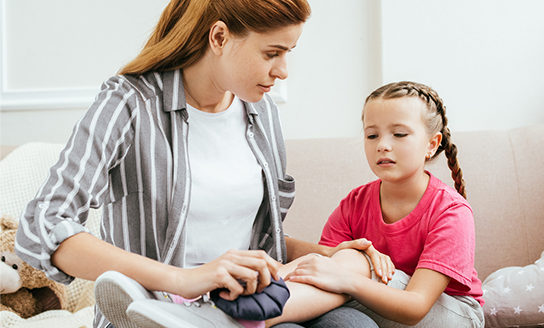
- Apply something cold. Wrap an ice pack, cold pack or bag of frozen peas in a thin cloth or tea towel and hold it gently on the area for about 10 minutes and repeat if you can. Never put ice directly on skin.
- Rest the area. Encourage quiet play for a while.
- Elevate if possible. If an arm or leg is bumped, raising it while your child is resting can help reduce swelling.
- Check for broken skin. If the skin is grazed or cut, rinse with clean water, pat dry and cover with a clean dressing. Press firmly with a clean cloth for 10 minutes if there is bleeding.
What to avoid
- Don't rub or massage a fresh bruise
- Don't apply heat in the first 48 hours
- Don't use creams or home remedies unless a health professional suggests them.
Bumps on the head
Head bumps are very common and, thankfully, usually minor. The scalp has a rich blood supply, so a small knock can quickly produce a large "goose egg" lump. This looks alarming but is often harmless.
Even though most head injuries are minor, it is always recommended to talk to a health practitioner for advice if your child has a head injury.
This is especially important if:
- pēpi is under 12 months old, or
- your child has fallen from a height of approximately 1 metre or higher, such as from a bed, change table, high chair or shopping trolley, or down several stairs.
Head injury warning signs
Get urgent medical help (call 111) if your child experiences any of these head injury warning signs after bumping their head:
- Loses consciousness, even briefly
- Has jerking movements of their arms, legs, or face (or a seizure)
- Vomits
- Becomes unusually drowsy, floppy or difficult to wake
- Is confused, unsteady, or seems "not themselves"
- Has a severe headache or is crying inconsolably
- Has blood or clear fluid coming from the nose or ears
- Has a soft or bulging spot on a baby's head, or a boggy swelling that is growing.
When to seek medical attention
Call 111 or go to the nearest emergency department if:
- Your child has any of the head injury warning signs above
- Your child has small red or purple spots or bruise-like marks that don't fade when pressed (try pressing a clear glass against the spots), especially with fever, drowsiness or looking very unwell. This can signal serious infection and needs immediate care.
- You are worried there might be a fracture because they are in severe pain or have a limb that looks bent or misshapen
- Your child is struggling to breathe, or has been hurt in the chest or abdomen and seems pale, very sleepy or in severe pain
- Your child has been in a serious accident, such as a car crash or a fall from height greater than one metre.
See a doctor or nurse the same day or soon if:
- Your child has a head injury (but does not display any of the head injury warning signs above)
- Your child won't use or put weight on an arm or leg, is limping, or cries when it's touched or moved
- There is significant swelling
- There is a bruise around the eye with swelling that prevents the eye opening or moving
- A bruise is getting more painful or larger after a few days instead of improving
- A bruise hasn't faded after about 2-3 weeks.
Bruises that always need to be checked
Some bruising deserves a professional look even if your child seems well:
- Any bruise on a baby who is not yet rolling, crawling or walking. Babies who aren't mobile rarely bruise, so a bruise should be assessed by a doctor or nurse, even if you know how it happened.
- Bruises appearing without a known cause, or a sudden increase in the number of bruises
- Large or unusual bruises, or bruises in places young tamariki don't commonly get hurt, such as the ears, neck, torso, buttocks, or inner thighs
- Bruises that don't match the explanation or that you simply feel uneasy about.
If a health professional asks detailed questions about how a bruise happened, this is routine and designed to keep children safe. It is not an accusation. Trust your instincts: if something doesn't seem right, it's always okay to ask.
Helping prevent bumps and bruises
Bumps and bruises are a common part of growing up and little bumps help tamariki learn their limits. A few simple steps can help lower the risk of more serious injuries:
- Never leave a baby unattended on a bed, couch, change table or high surface, even for a moment
- Use safety gates at stairs and fit window locks or guards
- Pad sharp corners on low furniture, and secure heavy furniture and TVs to walls
- Check highchairs and prams are used with the harness fastened
- Supervise play near stairs, playground equipment and water
- Keep floors clear of clutter and cords, and use non-slip mats in the bath
- Choose well-fitting shoes once your child is walking.
Last updated: 23 November 2026


