What causes scabies?
Scabies is caused by a tiny insect, called a mite, that digs under the skin and lays eggs. It is spread by skin contact with the infected person or by sharing bedding, towels and clothes.
What are the symptoms of scabies?
Your child may have scabies if they have a rash or complain of itchiness. The itching can be worse at night. Scabies causes a rash that is made up of small blisters surrounded by redness. It can take a couple of weeks to show. Infants may have atypical signs like difficulty feeding or irritability.
The rash is often very itchy and is usually found between fingers, on wrists, inside the elbow, around the waist, on the bottom or private parts, and under armpits. In infants and young tamariki it can also affect the scalp and face.
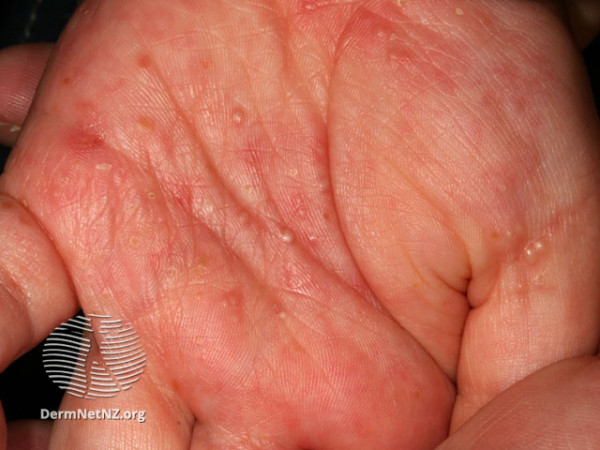
(DermNet NZ)
Treatment for scabies
Scabies will not go away without treatment. Early treatment can prevent scabies leading to serious skin infections and other health problems.
- Visit a pharmacist or healthcare provider to get a prescription for a scabies cream or lotion to kill the mites.
- Treat everyone in the household on the same day, even if they don’t have a rash or itch. This is important to avoid reinfection.
- Follow the application instructions – for infants and young children, cream is applied all over from head to toe, including the scalp, face, and ears all the way down to the soles of the feet.
- Leave the cream on overnight, for at least 8 hours.
- The same day you apply cream, treat all sheets, pillowcases, towels, soft toys and clothes used in the last 4 days to kill the mites. To treat you can:
- wash in hot water (more than 50 degrees C) for at least 10 minutes
- put dry items in the dryer on hot for at least 10 minutes
- put things into a sealed plastic bag for 4 days, or
- put things in the freezer for at least 5 hours.
- Keep children home from kohanga/school/daycare for at least one day after treatment with the cream.
- Vacuum sofas, carpets, and other soft furnishings in the home daily for 4 days following the first treatment.
- Treat everyone in the household again, seven days after the first treatment, even if there are no signs of a rash or itching. Retreat the clothing, sheets, towels, soft toys and clothes on this day as well.
- Keep an eye on all whānau members to look for reinfection.
What to do if the rash comes back or things get worse
After treatment with the insecticide lotion or cream, the rash should stop spreading, but skin may still be itchy for up to four weeks.
If the rash continues to spread, see a doctor or healthcare provider as another treatment with the lotion or cream may be required.
Occasionally the sores or rash can become infected and will require antibiotics. Call PlunketLine or visit your usual healthcare provider if you are worried, your child appears unwell, or an affected area:
- gets redder
- feels warm to touch
- starts to swell
- has pus.
More information about scabies
Last updated 11 August 2026

