Temperature
What's a normal body temperature?
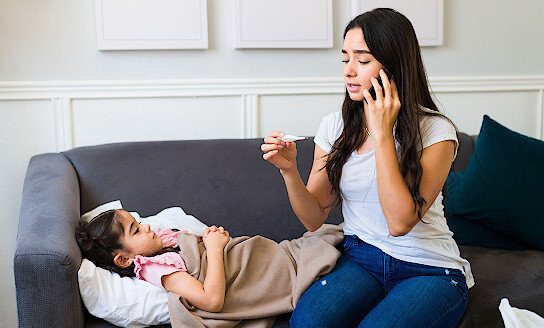
A normal temperature is around 37 degrees Celsius, while a fever is a temperature higher than 38 degrees Celsius.
Using a thermometer
You can use a thermometer to take your child’s temperature if they seem unwell. The number on the thermometer can’t tell you what’s causing the fever or how sick your child is. There are different thermometers available and some are better suited for certain ages than others.
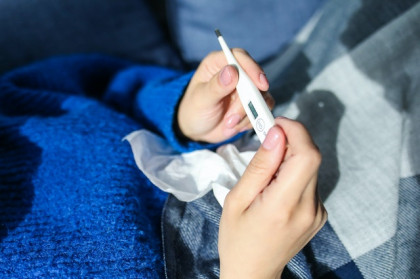
Digital thermometers give you a digital reading of your child’s temperature and can be used on children of any age. Usually these thermometers are the cheapest option and any brand will work. If your child is under five years old, place the digital thermometer under their arm.
Ear or tympanic thermometers can be used in older children, but not young babies, and are a bit more expensive than other types of thermometers. Read the instructions on how to take your child’s temperature and remember to be gentle and just place the thermometer in the entrance of the ear canal - it doesn’t have to be pushed right into the ear.
Infrared forehead thermometers measure your child’s forehead skin temperature by pointing the thermometer at your child’s forehead. Infrared thermometers may not be completely accurate and can be expensive.
How do you take a child's temperature without a thermometer?
Don’t worry if you don’t have a thermometer handy, you can still check whether your child has a fever. Slip two fingers down the back of their neck (under their clothes, in between the shoulder blades) and see if they feel hotter than normal.
Does teething cause fever?
Teething can make your child mildly warmer but does not cause a true fever. If your child is teething and has a fever or is acting unwell, this may mean that your child is unwell.
Fever in babies under three months
Young babies get fevers for the same reason older children do, but they’re not as good at fighting off infections. If your baby is under three months old and has a fever, take them to see a health practitioner immediately.
If your baby feels colder than normal that's a worrying sign – see your doctor urgently.
When to visit a health practitioner
A fever itself will not tell if you how sick your child is.
Always talk to or see a health professional if you are worried about your child, regardless of whether they have a fever or not. If you have already visited a doctor or health practitioner and you feel that your child is getting worse, take them back to be seen again.
Call PlunketLine or see your usual health practitioner if your child has a fever and:
- is unusually sleepy or irritable
- is not responding to you as normal
- has difficulty with their breathing, has noisy breathing or is breathing fast
- has a different cry or is crying more
- refuses to drink or is drinking less than normal
- has fewer wet nappies or is passing less wee than normal
- is vomiting and/or has diarrhoea
- has a non-blanching rash (a rash that doesn't fade when pressed with, and viewed through, a glass)
- is avoiding lights
- complains, or appears to have, a sore head or neck.
How to care for your child with fever
If your child is drinking well and interacting with you, there are some things you can do at home to help make your child feel more comfortable when they have a fever:
- give them extra rest
- provide extra cuddles and comfort and let them be near you
- offer extra fluids
- undress them so they are wearing just a single layer
- make sure the room isn’t too hot or too cold
- if your child feels cold and wants to be covered, that’s okay
- if your child is flushed and seems warm, remove a layer
- avoid cooling your little one too quickly – a cool face cloth on their forehead or neck may be soothing
If you're worried about your child – even if they don’t have a fever – you can call PlunketLine anytime on 0800 933 922 or take them to see a health professional.
Medication for fevers
Medications can be helpful if your child has a fever and is miserable or in pain, but they are generally not needed if your child with a fever is happy and does not appear unwell.
If you decide to give medication to your child with a fever, make sure to:
- read and follow the label to check how much medicine to give and how often for the strength of the medicine you are giving
- give the right dose (the dose is usually calculated based on the weight of the child)
- make sure the medication has not expired
- talk to the pharmacist to make sure the medicine is the right one for your child’s age, weight and problem.
Only give paracetamol or ibuprofen when really needed, and be extra careful with children who are dehydrated.
More about fever in children
Last updated: 28 July 2026


