Chickenpox is caused by a virus called varicella zoster. Tamariki who have the highest risk of catching chickenpox are those who:
- haven’t had a chickenpox immunisation
- have never had chickenpox before.
For most children, chickenpox is a mild illness and they'll make a full recovery, but occasionally tamariki can have complications that range from skin infections to more serious illnesses (pneumonia or brain inflammation).
Chickenpox spreads very easily through the air (coughing or sneezing) and direct contact with saliva, mucus, or liquid from blisters.
Symptoms
Chickenpox usually starts with a mild fever and one to two days later red, itchy spots will appear. Before the spots show, your child may have early symptoms including:
- headache
- runny nose
- cough
- loss of appetite
- feeling tired.
Spots typically start on the face and scalp, then spread to the chest, back and tummy and then to the arms and legs. The rash usually becomes very itchy and blisters will appear on each spot filled with liquid. When the blisters burst a couple of days later, a crust will form on each spot which will fall off after one to two weeks.
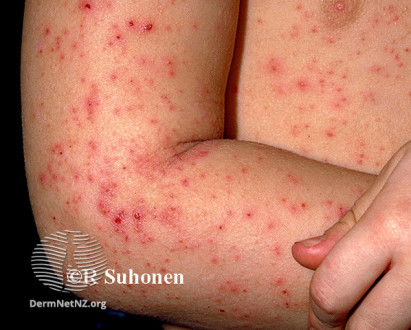
(DermNet NZ and Creative Commons)
Caring for your child with chickenpox
If your child has chickenpox:
Stay home
- Keep them home from daycare or kindergarten until all blisters have dried up and crusted over – usually 5-7 days after the rash appears.
Hydrate
- Make sure your child drinks plenty of water
- If spots appear in your child’s mouth it may make it painful to eat or drink. Offer clear cool drinks and soft bland foods − avoid acidic drinks such as fruit juices.
Keep them comfortable and minimise itching
- Trim nails short, and considering using mittens or clean socks to protect your child from scratching
- Dress your child in loose-fitting, comfortable clothing
- Change bed linens daily
- You can try a lukewarm bath to help soothe the itch. Adding oatmeal, baking soda or moisturising bath lotion to the water can alleviate the itch, but avoid soap since it can dry out the skin. Pat your child’s skin dry, rather than rubbing it, after bathing.
- Pine-tar solution (Pinetarsol) may be added to a bath or applied directly to the skin and rinsed off – this can help alleviate the itching.
- You can use calamine lotion if you find it soothes the itch for your child.
Medication
If your child is miserable, you can give them paracetamol to make them comfortable. Make sure to follow the dosage instructions, as it's dangerous to give more than the recommended dose.
Ibuprofen (also called Nurofen, Brufen, Fenpaed) is not recommended for chickenpox. Never give your child aspirin, as this may increase the risk of Reye syndrome (a rare and serious illness).
When to visit a doctor
You should see a doctor if your child has chickenpox and:
- is very young
- has a high fever
- is very ill
- becomes very drowsy
- is breathing fast or vomiting
- you are worried about them.
Chickenpox can be dangerous for some people including the very young, pregnant people, elderly people, and anyone with reduced immunity due to a health condition or medication use. See a doctor if you are pregnant and have been exposed to, or think you have chickenpox.
Immunisation
The chickenpox vaccine is free and part of the NZ Immunisation Schedule 2026 at age 15 months and as a catch up for children aged 11 and over.
Most people who get the vaccine won’t get chickenpox, and if an immunised person does get the disease, it’s usually mild.
Chickenpox
Last updated: 1 September 2026


